
Currently Empty: ₹0.00
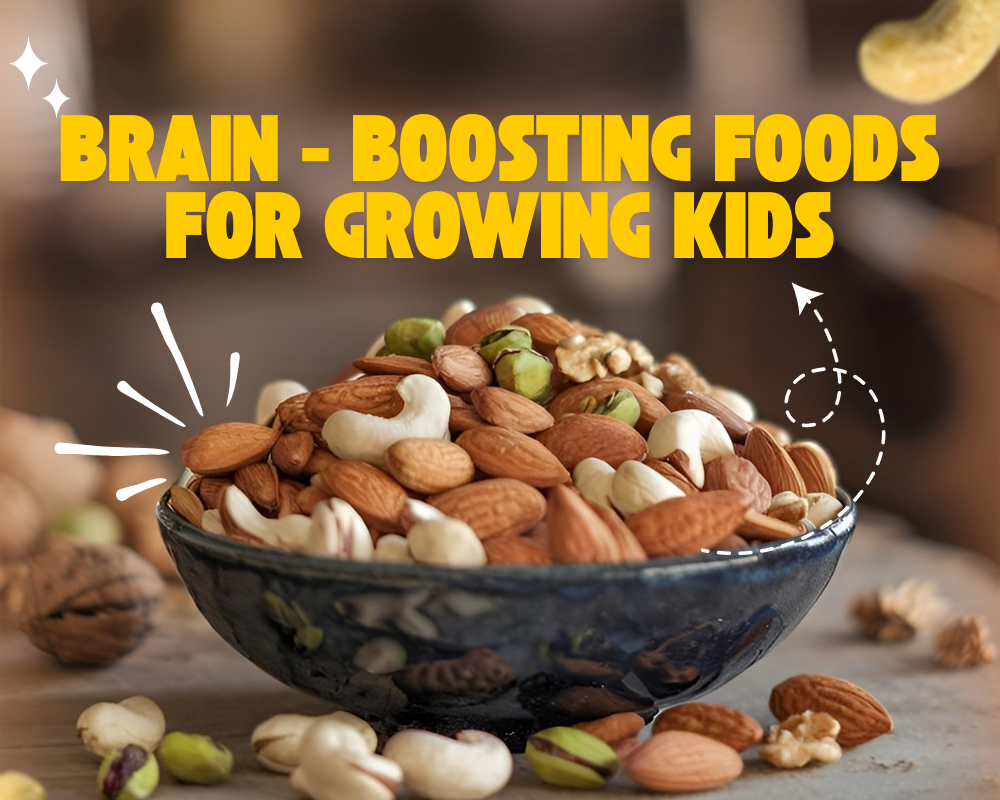
If you’re a parent, you’ve probably said this at least once:
“Bas 2 badam khao, dimag tez hoga.”
And while that line has been passed down for generations, there’s actually a lot of truth behind it. Dry fruits can be a great addition to your child’s diet – when given in the right way and the right quantity.
Let’s make it simple.
Why Are Dry Fruits Good for Kids?
Kids are constantly growing — physically, mentally, and emotionally. Dry fruits provide concentrated nutrition that supports this growth without needing large portions.
Here’s how they help:
- Boost brain development – Almonds and walnuts support memory and focus
- Improve immunity – Raisins and dates help fight frequent colds and infections
- Provide natural energy – Perfect for active, always-on-the-move kids
- Support healthy digestion – When eaten in moderation
- Strengthen bones – Cashews and almonds provide essential minerals
How Much Dry Fruit Is Enough for Kids?
This is where many parents go wrong – more is not better. A child only needs small portions.
Daily Portion Guide (Ages 3–12)
Almonds: 2–4 (preferably soaked & peeled)
Walnuts: 1–2 small pieces
Cashews: 2–3
Raisins: 1 teaspoon
Dates: ½ to 1 small date
One type per day is perfectly fine. You don’t need to give everything together.
Best Time to Give Dry Fruits to Kids
Morning: Best time, especially soaked almonds or raisins
Mid-snack: Works well between meals for energy
Avoid at night: Can feel heavy on the stomach before bedtime
Soaked or Raw — What’s Better?
For kids, soaked dry fruits are always a better choice:
- Easier to chew and digest
- Reduced chances of stomach discomfort
- Better nutrient absorption
Tip: Soak almonds overnight, peel them in the morning, and chop them finely for younger kids.
Easy Ways to Include Dry Fruits in Kids’ Diet
If your child says “no” to plain dry fruits (very common ), try these:
- Add chopped dry fruits to porridge or oats
- Mix into smoothies or milkshakes
- Use in homemade laddoos or energy balls
- Sprinkle over curd or fruits
Things Parents Should Be Careful About
- Avoid giving whole nuts to very young children (choking risk)
- Don’t add salted or sugar-coated dry fruits
- Watch for nut allergies
- Stick to portions — even healthy foods need balance
Final Thoughts
Dry fruits can be a wonderful daily habit for kids when given mindfully. You don’t need fancy superfoods — just a few soaked almonds or raisins can go a long way.
Small portions. Big benefits.
That’s the secret.

